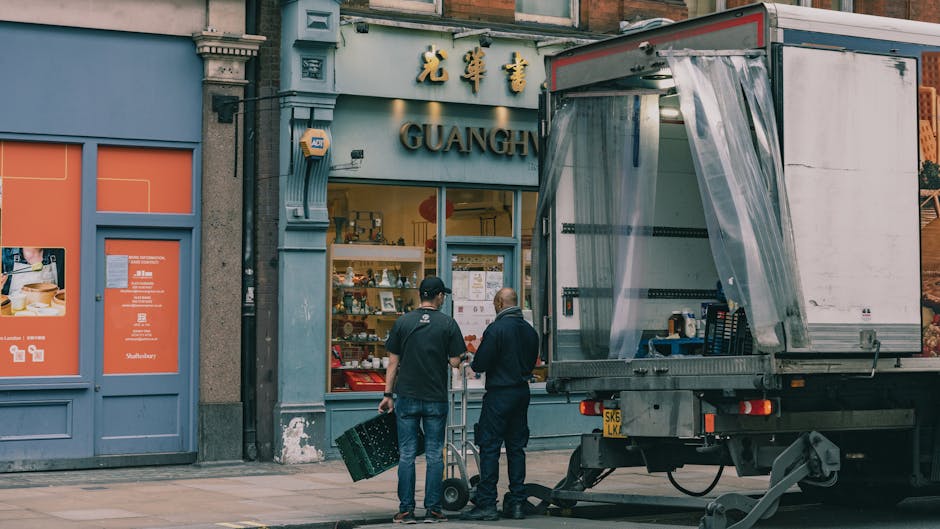
Shepherds Bush Market removals guide for tight access moves

If you are planning a move around Shepherds Bush Market, you probably already know the tricky bit is not the lifting, it is the access. Narrow pavements, busy foot traffic, awkward loading points, stairs, shared entrances, and the general London "just-one-more-car-forsure" chaos can turn a straightforward move into a small logistical puzzle. This Shepherds Bush Market removals guide for tight access moves is here to help you think ahead, avoid the usual headaches, and make the whole day feel calmer and more controlled.
Whether you are moving a flat, a studio, a small office, or just a few bulky items, the key is planning for the environment as much as the furniture. Get the access right and the move feels smooth. Get it wrong and you spend the morning shuffling boxes, apologising to neighbours, and wondering why the wardrobe looked so easy in the room but not in the doorway. Let's fix that.
Why Shepherds Bush Market removals guide for tight access moves Matters
Moves in and around Shepherds Bush Market often need more thought than a standard London removal. The area can be busy at peak times, footpaths may be tight, parking is rarely generous, and loading needs to be handled with care so you are not blocking the wrong entrance or carrying a sofa half a street because the van cannot get closer. That is the reality, not a dramatic version of it.
Tight access matters because every extra step adds time, effort, and risk. A short carry becomes a long one. A light item becomes awkward once you are turning through a narrow stairwell. A morning move becomes an all-day drag if you have not planned where the vehicle will stop. That is why good removals planning is not about being fancy. It is about removing friction before the move starts.
In practical terms, Shepherds Bush Market areas can be especially challenging for:
- flats above shops or in mixed-use buildings
- properties with shared hallways or limited lift access
- busy streets with fast-changing parking availability
- deliveries or collections during market hours
- bulky furniture that needs careful cornering
It also affects communication. If the mover, the customer, and the building all assume different access arrangements, the day gets messy fast. A good plan keeps everyone on the same page. Simple, but easily missed.
How Shepherds Bush Market removals guide for tight access moves Works
A tight-access move is usually handled in three stages: survey, route planning, and execution. That sounds tidy, and in real life it is a bit more human than that, but the framework helps.
First comes the access check. This means looking at where the van can stop, how far items need to be carried, whether there are stairs or lifts, and whether the largest pieces will physically fit through doors, corridors, and turns. For many local moves, the problem is not the size of the item alone; it is the combination of item size plus angle plus time pressure.
Then comes load planning. Good movers decide which items go first, what needs dismantling, what can stay wrapped until the final stage, and what should travel in a smaller vehicle if the access is especially awkward. This is where a flexible service such as man with a van can be a practical choice for smaller or tighter moves, while larger or heavier jobs may need a bigger removal van or even moving truck support.
Finally comes the on-the-day handling. That means protecting floors and corners, moving in the right order, and keeping the route clear. In a tight area, speed matters, but not at the expense of control. Nobody wants a rushed carrier turn in a narrow stairwell. That is how dings happen.
For more complex household jobs, it can help to review the broader options on removals or home moves so you can match the service level to the space you are dealing with.
Key Benefits and Practical Advantages
There are real benefits to planning a Shepherds Bush Market move properly, especially when access is tight. Some are obvious. Others only show up once the van has arrived and you are not panicking.
- Less damage risk: Clear routes and correct handling reduce knocks to walls, bannisters, and furniture.
- Faster loading: When the vehicle can park in the best possible spot, the whole day moves more efficiently.
- Lower stress: Good planning stops that horrible "where do we even put this?" feeling.
- Better protection for bulky items: Proper wrapping and dismantling make awkward pieces far easier to move.
- More predictable costs: Time saved on carrying and rework usually means fewer surprises.
There is also a quieter benefit: a better relationship with the building and the neighbours. If the move is organised, people tend to be more patient. If it blocks the stairwell for ages, not so much. Truth be told, that social layer matters in London.
For customers moving a single item or several pieces of furniture, a focused service such as furniture removals or furniture pick up can be enough. For bigger domestic plans, house removals or flat removals may be the better fit.
Who This Is For and When It Makes Sense
This guide is useful if you are moving from or to a property where access is not straightforward. That could mean a compact flat above a shop, a student room with steep stairs, a shared house with a tight hallway, or a business unit tucked into a busier street near the market.
It tends to make the most sense for:
- people moving in and out of upper-floor flats
- students shifting between rooms, halls, or shared houses
- small businesses relocating stock, fixtures, or office furniture
- families who have one or two bulky items but limited access
- anyone who needs careful planning rather than a rushed load-and-go
If you are moving on short notice, a same day removals service can sometimes be a sensible fallback, but only if the access is explained clearly and the inventory is realistic. A last-minute move and a narrow staircase is not the best combination, let's be honest.
Students and shared households may also benefit from student removals, especially when they only have a few key items and need a simple, cost-conscious plan.
Step-by-Step Guidance
If you want a move that feels controlled rather than chaotic, follow a structured approach. These steps are simple, but they work.
- Measure the access points. Check door widths, stair turns, lift dimensions, ceiling height in awkward spots, and the clearance at the front entrance.
- List the bulky items first. Sofas, wardrobes, beds, tables, pianos, and appliances should be recorded before anything else.
- Decide what needs dismantling. If a piece can come apart safely, it often should. Do not force it through a tight space if it can be broken down.
- Plan the van stop point. The nearer the vehicle can park, the smoother the move. If parking is uncertain, build in extra time.
- Protect the route. Use coverings for floors, corners, and banisters where needed.
- Pack in load order. Keep the first items out accessible and label boxes clearly.
- Confirm timing with the building. If there are access windows, lift bookings, or restricted loading times, sort that before move day.
- Keep essentials separate. Chargers, keys, documents, medication, and basic toiletries should travel with you.
If your move involves packing support, a service like packing and boxes or packing and unpacking services can save a surprising amount of energy. A well-packed box is a beautiful thing, honestly. Much more beautiful than a half-sealed cardboard one with a handle tearing off at the worst moment.
Short version: measure first, move second, and never assume access will be fine just because the item looked "not that big" in the room.
Expert Tips for Better Results
There are a few small habits that make a big difference in tight-access removals. None of them are glamorous. All of them matter.
- Photograph tricky access points. Stairs, doorways, and parking bays are much easier to assess when you can actually see them.
- Use blankets and corner protection early. Do not wait until the first scrape to think about it.
- Keep one person as the access lead. Too many voices shouting directions in a hallway is rarely helpful.
- Move smaller items first if they clear the route. That can make space for the bigger pieces later.
- Build in a buffer. Tight access always takes longer than open access. Always.
- Have a backup plan for parking. Sometimes the first choice is taken. Sometimes the road is fuller than expected at 8:30 on a weekday morning.
One of the most useful decisions is choosing the right vehicle size. A smaller vehicle may be easier to position close to the property, while a larger one can reduce trips but be harder to park. For some jobs, the best answer is not "bigger van", it is "smarter van".
If you are unsure how much help you need, start by looking at removal services and then match the job to the access conditions, not the other way round.
Common Mistakes to Avoid
Most moving problems are avoidable. The same few mistakes show up again and again, especially in busy London neighbourhoods.
- Underestimating stair difficulty: A staircase with a turn can be the real challenge, not the item size.
- Assuming parking will be easy: Near Shepherds Bush Market, that assumption can bite you quickly.
- Not measuring furniture: Guessing rarely ends well. Tape measure first, drama later.
- Packing too late: Last-minute packing leads to damaged boxes and missing essentials.
- Forgetting about neighbours or building rules: Access arrangements matter as much as the move itself.
- Leaving no time buffer: If one lift journey takes longer than expected, the schedule can fall apart.
Another common slip is not being honest about how much is being moved. People often say, "It's just a few bits," and then you arrive to find a wardrobe, two bookcases, a bike, three suitcases, and a plant collection that somehow owns the flat. It happens more than you'd think.
When the move includes higher-risk items, such as a piano or specialist furniture, it is safer to use a dedicated service like piano removals rather than trying to improvise.
Tools, Resources and Recommendations
You do not need a van full of fancy kit to manage a tight-access move, but a few practical tools help a lot.
- Measuring tape: Useful for doorways, furniture, lifts, and stair gaps.
- Furniture covers and blankets: Good for protecting corners and surfaces.
- Strong tape and labels: Helps with box organisation and load order.
- Dismantling tools: Keep the right screwdriver or hex key handy if furniture comes apart.
- Floor protection: Especially helpful where shared stairwells or polished floors are involved.
- Storage option: A short-term holding plan can be useful if access is awkward on both ends.
Sometimes the smartest resource is not a tool but a service choice. For example, if your access is tight and your timeline is flexible, moving part of the load into storage can reduce pressure. If the move is business-related, office removals or office relocation services may be more appropriate than a general domestic move.
For larger or mixed loads, it can also help to compare a compact man with a van arrangement with a more structured booking through removal companies. There is no single perfect answer. It depends on your access, your inventory, and how much time you have.
Law, Compliance, Standards and Best Practice
For a local move, the main compliance concerns are usually practical rather than dramatic. You are mainly thinking about safe lifting, traffic awareness, building access, and clear communication. If your move involves a business premises, a shared block, or anything with formal site rules, those details matter even more.
Good practice usually includes:
- checking whether the building has its own move-in/move-out rules
- making sure access routes are not blocked unnecessarily
- using safe lifting techniques and suitable team numbers
- handling fragile or heavy items with proper care
- confirming insurance and responsibility before items are moved
On that last point, it is sensible to understand what your mover covers. A trustworthy removals provider should be clear about safety and insurance expectations. If you want to read more about that side of things, the website's insurance and safety information and health and safety policy are useful starting points. The same goes for the practical terms of the job, including payment and booking expectations via payment and security and terms and conditions.
There is also a sustainability angle worth noting. A move generates packaging waste, and tight-access jobs often use extra wrapping and protective materials. If recycling and disposal matter to you, it is worth reading the site's recycling and sustainability information so you can keep the move a bit cleaner and more responsible.
Options, Methods, or Comparison Table
For Shepherds Bush Market removals, the right method depends on load size, access difficulty, and how much hands-on support you want. Here is a simple comparison.
| Move type | Best for | Strengths | Watch-outs |
|---|---|---|---|
| Man with a van | Small flats, single-room moves, a few items | Flexible, often easier to park close, practical for tight access | May not suit very large loads or multiple bulky items |
| Removal van | Moderate domestic moves | Good balance between capacity and manoeuvrability | Parking and access still need planning |
| Moving truck | Larger homes, heavier jobs, fuller loads | More capacity, fewer trips | Can be harder to position in tight streets |
| Storage-assisted move | Staged moves, delayed handovers, uncertain access | Reduces pressure and gives breathing room | Requires an extra step in planning |
In simple terms: if the access is the real problem, a smaller and more agile setup can beat a bigger vehicle every time. Bigger is not always better. Sometimes it is just bigger.
Case Study or Real-World Example
Here is a realistic example. A customer moving from a top-floor flat near Shepherds Bush Market had a sofa, a bed frame, a desk, and around twenty boxes. The front entrance was shared, the stairwell had a turn halfway up, and road space outside was tight enough that stopping for too long would have caused awkwardness.
Instead of trying to do everything in one rushed push, the move was broken into clear stages: furniture was wrapped first, the bed was dismantled, the smaller boxes were carried out early to create space, and the van was positioned as close as possible without blocking access. It was not a spectacular move. That was the point. It was calm, steady, and finished without damage.
The customer had originally assumed a standard van would be enough, but after checking the access and the item list, a more suitable arrangement was chosen. That saved repeat trips and reduced the pressure in the stairwell. One of those "small change, big difference" situations.
That is really the lesson here. Tight access moves are won before the first box is lifted.
Practical Checklist
Use this checklist before moving day. It is basic, but it catches most of the avoidable problems.
- Measure doorways, stairs, lifts, and any awkward turns
- List all furniture, appliances, and fragile items
- Decide what needs dismantling
- Confirm where the van can stop
- Check whether building rules or loading limits apply
- Label boxes by room and priority
- Keep documents, keys, and essentials separate
- Protect floors, bannisters, and corners where needed
- Tell movers about any heavy, fragile, or unusually shaped items
- Allow extra time for tight access and market-area traffic
Expert summary: If you can measure it, label it, and plan it, you are already halfway to an easier move. The rest is just good handling and a bit of patience.
Get a free quote today and see how much you can save.
Conclusion
A move near Shepherds Bush Market does not have to be stressful just because access is tight. With the right planning, the right vehicle, and the right sequence, even awkward buildings can be handled cleanly. The secret is to respect the space you are working in. Measure it, picture it, and move with it rather than against it.
If you are preparing for a flat move, a furniture-only job, or a more complex household relocation, the smartest step is to match the service to the access conditions early. That gives you more choice, more control, and fewer surprises on the day. And honestly, fewer surprises is what we all want from removals.
When the boxes are finally stacked and the last chair is through the door, the best feeling is not speed. It is relief. Quiet, practical relief. And that's a good thing.
Frequently Asked Questions
What makes Shepherds Bush Market removals difficult?
The main challenge is tight access: narrow streets, limited parking, shared entrances, stairs, and busy pedestrian flow. Even a small move can take longer if the van cannot stop close to the property.
Is a man with a van enough for a tight-access move?
Often, yes, for smaller loads or single-room moves. A smaller vehicle can be easier to position near the property, which is a big advantage in busy London streets.
Should I dismantle furniture before moving day?
If the item is large or awkward, dismantling is usually wise. It reduces the risk of damage and makes stair turns and narrow hallways much easier to manage.
How do I know if my access is too tight for a standard removals van?
If doorways are narrow, stair turns are sharp, or parking is far from the entrance, a standard setup may not be ideal. A quick measurement and a few photos usually make the answer clearer.
Can removals near Shepherds Bush Market be done on short notice?
Sometimes they can, especially if the load is small and access is straightforward. For more complicated moves, a bit of planning usually gives a much better result.
What should I tell the removals team before the move?
Tell them about all large items, any stairs or lifts, parking restrictions, tricky corners, and anything fragile or unusually heavy. The more accurate the information, the smoother the day.
What if my building has move-in rules or booking times?
Follow them. Building rules can affect access windows, lift use, and loading arrangements. If you ignore them, you may end up waiting around with boxes and no easy way forward.
Is storage useful for tight-access moves?
Yes, especially if the move needs to be split into stages or if access is awkward at one end of the journey. Short-term storage can take the pressure off.
How much packing support do I need?
That depends on time, budget, and how much you want to do yourself. For fragile or awkward moves, professional packing can make a noticeable difference, particularly in tight stairwells.
What is the safest way to move heavy items in narrow spaces?
Use proper lifting technique, enough people for the weight, and protection for the route. If the item is especially heavy or delicate, specialist handling is the safer choice.
Are office moves handled differently from home moves?
Yes, usually. Office moves often need more planning around access, timing, and equipment. If your move is commercial, it is better to look at dedicated commercial moves or office relocation services.
Where can I find pricing information before booking?
You can review the available pricing guidance on pricing and quotes to get a clearer idea of how the service is structured before you commit.